September 7, 2026 · 6-min read
How to Study the Bible with a Reading Plan That Actually Fits Your Life
You don't need a year-long checklist to grow in God's word. You need a plan small enough to actually keep.
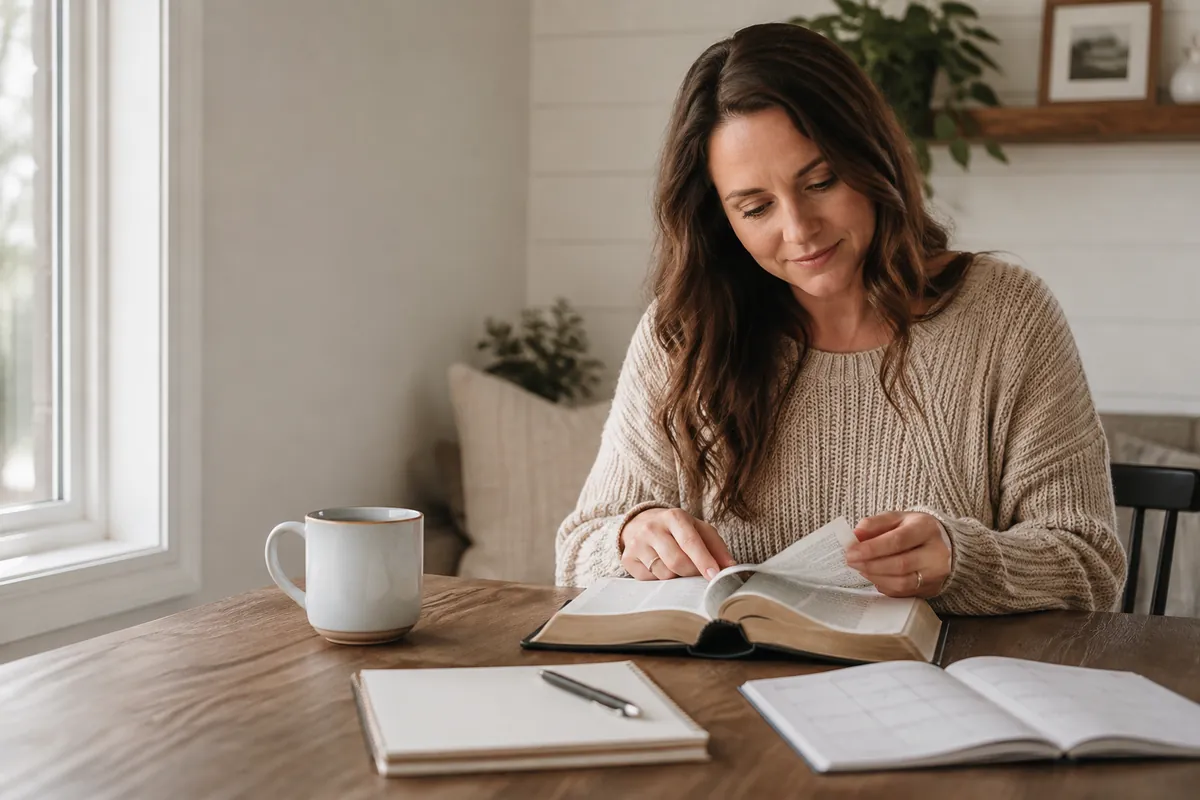
The best bible reading plan for beginners is a short, simple one you can finish most days, not a rigid year-long list that leaves you feeling behind by week two. Pick a small daily portion, a consistent time, and a plan that lets you skip a day without falling apart.
What makes a reading plan realistic for beginners?
A realistic plan is built around your actual week, not an ideal version of it. It should be:
- Short enough to finish in ten to fifteen minutes
- Forgiving of a missed day or a hard week
- Focused on one section of scripture at a time, not the whole Bible at once
- Simple enough that you don't need to look anything up to know what to do next
Many beginners quit not because they lack discipline, but because the plan they chose was designed for someone with more uninterrupted time than they have. Choose the plan to fit the life you actually live.
How much should I read each day to start?
Start smaller than feels impressive. A single chapter, or even ten to fifteen verses, is enough to build the habit.
Psalm 119:105 puts it simply: "Thy word is a lamp unto my feet, and a light unto my path." A lamp does not light the whole road at once. It lights the next few steps. That's what a beginner's plan should do too.
A workable weekly rhythm might look like this:
- Monday to Friday: one short passage, five to fifteen minutes
- Saturday: a lighter day, review one verse that stood out
- Sunday: rest from the plan, or simply reread the week's passages
If even that feels like too much some weeks, cut it in half. Consistency at a smaller size beats ambition that quietly stops.

What should a beginner's plan actually include?
A good starting plan has four simple parts, and none of them require special training:
- A passage – short and specific, not "read a few chapters"
- A question – something plain, like "what does this show me about God?"
- A response – one sentence you write down, even just a phrase
- A prayer – short, honest, tied to what you just read
You don't need a seminary background to study scripture this way. You need a passage, a pen, and a few honest minutes. If you already keep a notebook for this, how to journal your prayers is a natural next step once the reading habit feels steady.
Where should a beginner start reading?
Order matters less than momentum, so pick a starting point that keeps you moving rather than the technically correct one.
Good starting places for beginners include:
- The Gospel of John – a clear, personal introduction to Jesus
- Philippians – short, warm, and encouraging
- Psalms – read a few at a time, especially when you need comfort
- James – short and practical, good for daily living
Avoid starting in the middle of long genealogies or detailed Old Testament law sections. Those chapters matter, but they are not where most beginners find their footing, and a discouraging first week can end a habit before it starts.
What if I miss a day, or a whole week?
You pick back up where you are, not where the calendar says you should be.
Rigid, date-stamped plans can quietly punish a missed week by making you feel behind for the rest of the year. A better approach is a plan organized by day number rather than calendar date, so day fourteen is still day fourteen whenever you get to it.
If a week gets away from you entirely, don't try to catch up all at once. Simply resume with the next short passage. The goal is a habit you return to, not a record you have to protect.
How do I turn daily reading into real study?
Reading and studying are related but not identical. Reading moves through the text; studying slows down inside it.
A simple way to add a little study without adding much time:
- Underline or note one phrase that stands out
- Ask why that phrase caught your attention
- Look at the verse just before and after it for context
- Write one line about how it applies to something in your actual week
This is also where a Bible study group can help, since talking through a passage with others often surfaces things a solitary read misses. If you're building that kind of daily habit on your own first, building a daily quiet-time habit that sticks walks through the practical side of making the time itself stick before adding depth.
Where a scripture writing plan can help
Some beginners find that writing out a passage by hand, rather than only reading it silently, helps the words stay with them longer. It slows the pace naturally and gives you something concrete to return to later.
If you'd like a structured way to try this, the 30-Day Scripture Writing Plan offers a short daily passage to write out alongside a simple prompt, built with the same "small and repeatable" approach described above. It's meant to sit alongside your reading plan, not replace it.
You can also browse the full shop if you're looking for a study guide or leader guide to go with your group's next season together.
A reading plan doesn't have to be impressive to be effective. It has to be small enough to finish, honest enough to skip a day without guilt, and steady enough that a year from now, you're still in it.
Frequently asked questions
- How long should a beginner Bible reading plan be?
- Start with something you can finish in ten to fifteen minutes a day rather than a full year-long plan. A shorter, repeatable plan you actually complete does more good than an ambitious one you abandon by February.
- Do I need to read the Bible in order, from Genesis to Revelation?
- No. Many beginners find it easier to start in one of the Gospels, then move to a shorter New Testament letter, before circling back to the Old Testament. Reading in a helpful order matters more than reading in book order.
- What translation should a beginner use?
- Any translation you can understand and will actually open is the right one. Public-domain options like the King James Version are widely available and free, and many study Bibles offer clear modern-English translations as well.
- Is it better to read a little every day or a lot once a week?
- A little every day almost always wins. Short, consistent contact with scripture builds a habit and helps verses stay with you, while long weekend catch-up sessions are easy to skip when the week gets full.
- What if I do not understand what I am reading?
- That is normal, especially early on. Read a short passage slowly, ask one simple question of the text such as what it shows about God, and use a study guide or notes when a passage feels confusing.
- bible reading plan
- beginners
- quiet time
- bible study methods
- daily devotion
Related reading
- How to Study the Bible with a Study Bible's FootnotesLearn how to use study Bible footnotes and cross-references without feeling overwhelmed, with a simple step-by-step approach for quiet time.
- How to Study the Bible When You're Going Through a DivorceA gentle, practical guide to bible study for women going through divorce, with simple steps for quiet time when your heart and schedule are in pieces.
- How to Write a Bible Study Guide for Your Small GroupLearn how to write a Bible study guide for your small group, step by step, with a simple structure you can reuse week after week.