November 6, 2026 · 7-min read
How to Make a Bible Study Binder That Keeps You Organized
A simple system turns loose papers and scattered notes into one place you actually want to open.
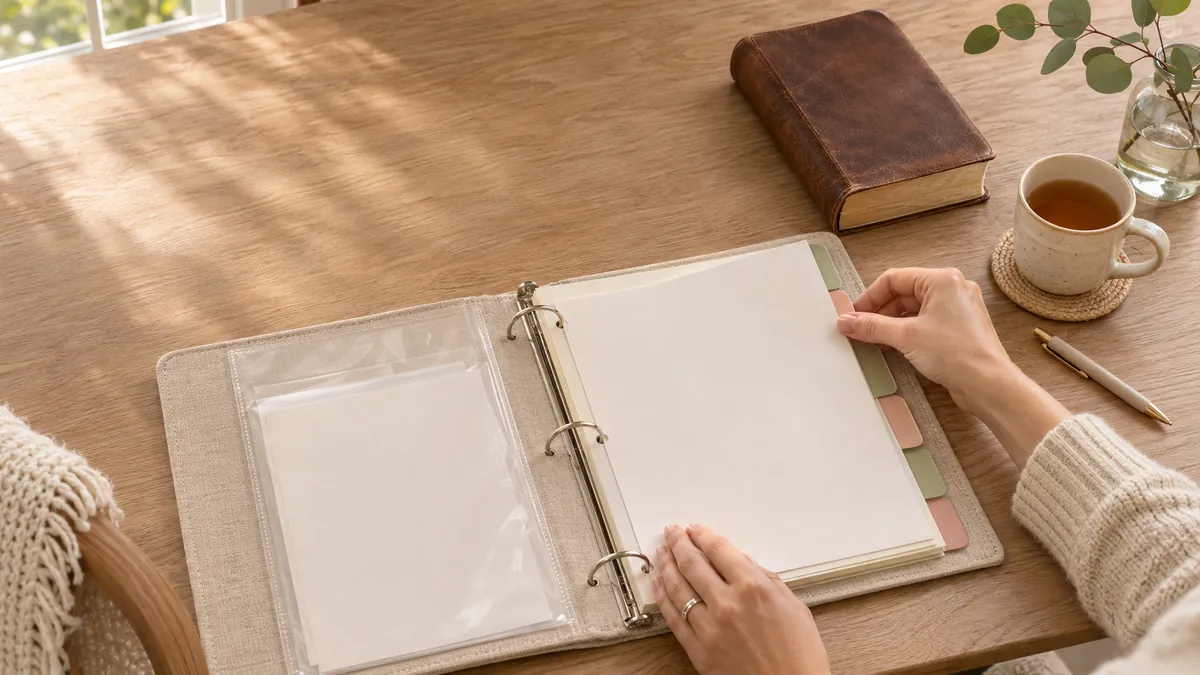
A Bible study binder is a three-ring binder divided into labeled sections, usually by book of the Bible, topic, or week, that holds your notes, printables, and handouts in one place so nothing gets lost between studies. Setting one up takes less than an hour and saves you from digging through stacks of loose paper every time you sit down to read.
If you have ever shown up to small group without last week's notes, or lost a printable study guide somewhere between your car and the kitchen table, you already know why this matters. A binder is not about being the most organized woman in the room. It is about having one place to open your Bible study and know exactly where everything is.
Why does a Bible study binder help?
A binder solves a problem that notebooks and apps cannot: it holds mixed materials.
- Printed study guides and handouts from church
- Your own handwritten notes
- Verse lists, prayer lists, and memory verse cards
- Maps, timelines, or genealogy charts from a study
Psalm 119:11 says, "Thy word have I hid in mine heart, that I might not sin against thee." Hiding God's word in your heart often starts with simply keeping it in front of you consistently, and a binder makes that easier because you are not hunting for last week's page before you can even begin.
What supplies do I need to start?
You do not need anything fancy. Most of these items are already in a junk drawer somewhere.
- A three-ring binder, 1.5 to 2 inches wide
- Tabbed dividers, at least five to eight
- Lined or blank paper, or a dedicated notes pad
- A three-hole punch for handouts that do not already have holes
- Sheet protectors for anything you want to keep clean, like a favorite printable
- Pens or highlighters you already use for marking notes
Choose a binder that opens flat and lies comfortably on a table or your lap. A binder that fights you every time you open it will quietly discourage you from using it.
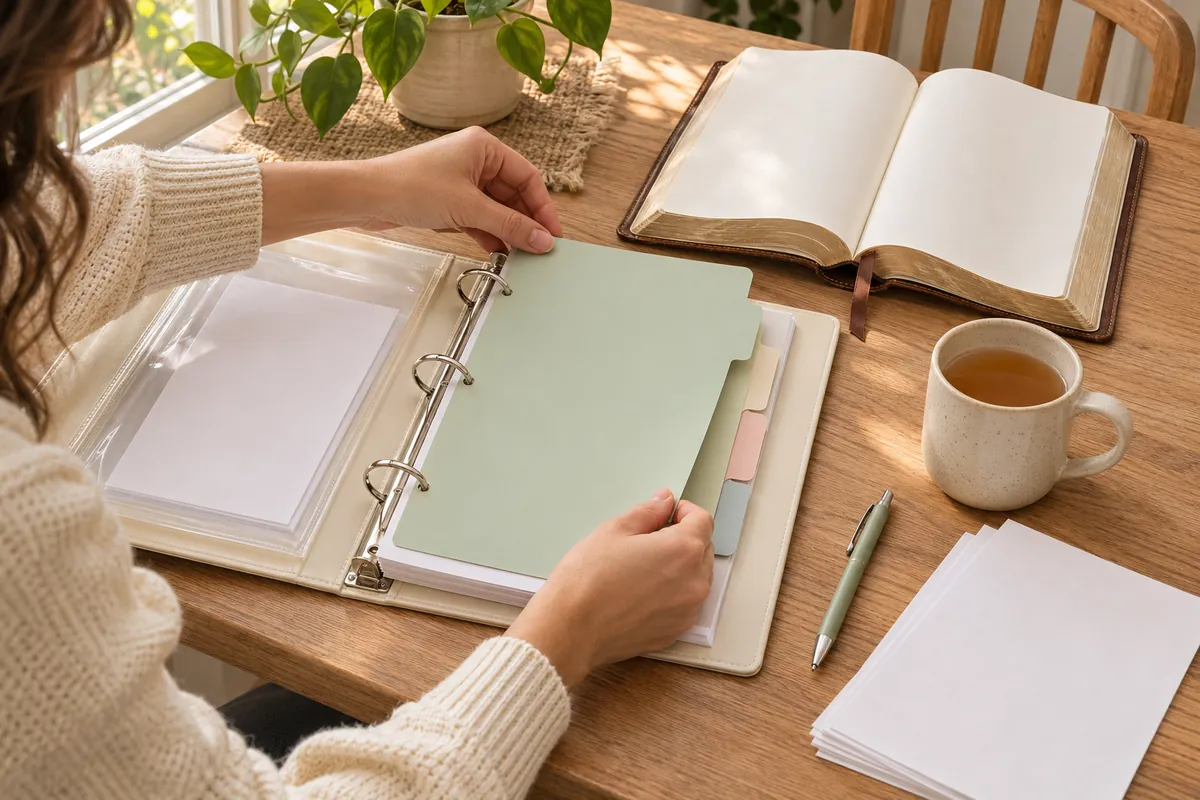
How do I set up the sections?
This is the part that actually keeps you organized, so give it a little thought before you start filling pages.
Divide by what fits your study rhythm
Pick one organizing method and stick with it:
- By book of the Bible — one tab per book, useful if you tend to work through books slowly, like the method described in a simple method for studying a book of the Bible
- By week or date — one tab per month, with notes filed in order underneath
- By topic — tabs like Prayer, Forgiveness, Grief, Parenting, useful if your studies jump around based on need
- By study series — one tab per curriculum or small group series you are currently in
A simple starting lineup
If you are not sure where to begin, this order works for most women:
- Contents or index — a single page listing what is in each tab
- Current study — whatever book, topic, or series you are in right now
- Notes — blank or lined pages for your own reflections
- Prayer requests — a running list you update weekly
- Printables and handouts — anything from church or small group
- Reference — verse lists, memory verses, or a reading plan like the one in a reading plan that actually fits your life
Keep the front section light. The goal is to open the binder and land on exactly what you need within a few seconds.
What should go on each page?
A page does not need to look polished to be useful. It needs to be legible to you in six months.
A simple notes page can include:
- The date and the passage you read
- One or two verses that stood out, written out in full
- A short observation: what is this passage actually saying
- One honest application: what does this mean for my week
- A prayer, even just a sentence
If you lead a small group, your pages might also include discussion questions, who attended, and prayer requests to follow up on. Keeping that history in one binder means you are never starting from scratch when someone asks how a prayer request from last month turned out.
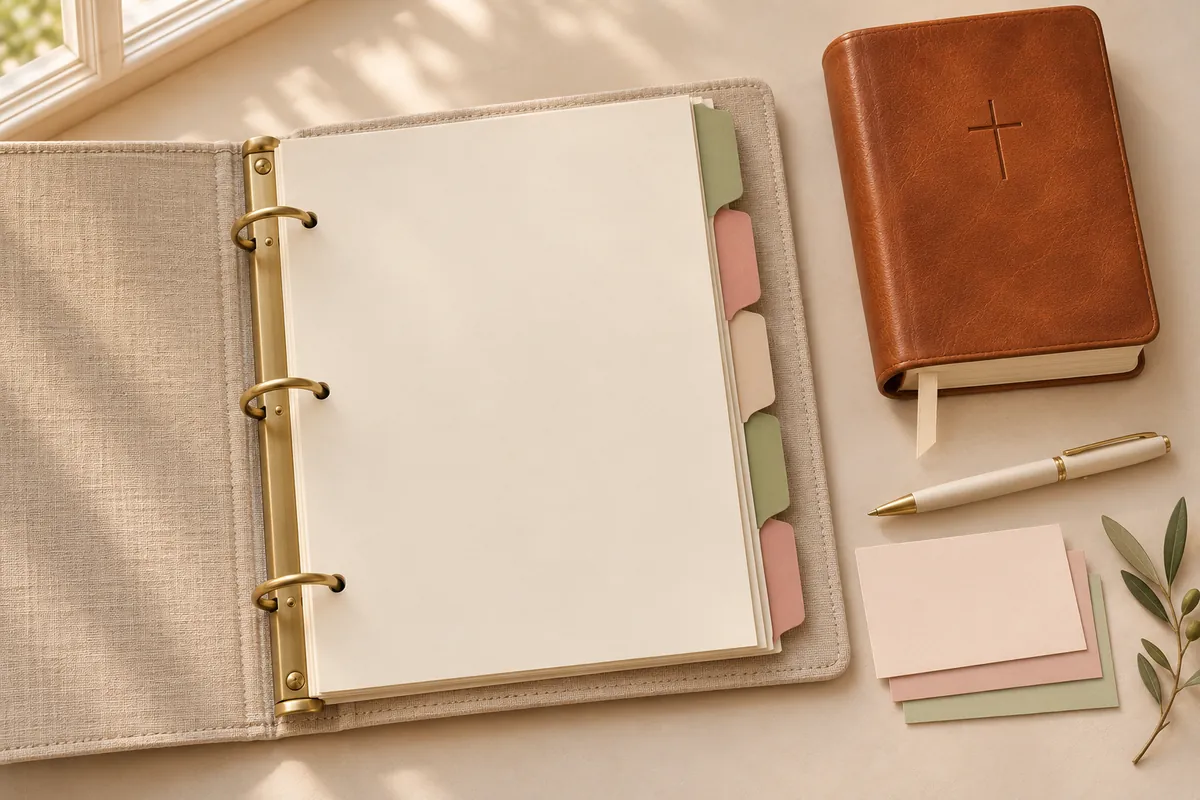
How do I keep it from becoming cluttered?
Binders drift toward chaos the same way kitchen drawers do, unless you build in a little upkeep.
- Review monthly. Pull out handouts you no longer need and file them in a separate archive folder instead of the day-to-day binder.
- Punch holes right away. A loose paper that does not get punched the day you receive it rarely gets punched later.
- Use sheet protectors sparingly. Save them for pages you reference often, not everything, or the binder gets heavy fast.
- Keep one pen clipped inside. A binder pouch or a pen loop means you are never without a way to write.
If your days are already full, pairing the binder with a short, consistent routine helps more than the binder alone. Studying the Bible on your lunch break with the 10-minute method is a good example of a rhythm that keeps the binder filled without demanding a long sitting every day.
What if I want something ready-made?
Building a binder from scratch is satisfying, but some weeks you just want to open something and start writing. If that sounds like where you are right now, a printed companion like the Women's Bible Study Notes Journal, Physical Edition gives you structured notes pages you can three-hole punch and slide right into your binder's notes section, rather than designing your own from a blank page every week. It is a small shortcut, not a replacement for the system you are building, and you can browse other guides and journals in the shop if you want more pieces to fill out your sections.
A binder that actually gets used
The best Bible study binder is not the prettiest one. It is the one you reach for without thinking twice, because you know exactly what is behind each tab. Start with a handful of sections, fill them in as you go, and let the binder grow alongside your study rather than trying to build the perfect system before you ever open your Bible.
As Proverbs 2:1 puts it, "My son, if thou wilt receive my words, and hide my commandments with thee." A little order on paper is simply one more way to make room for that word to stay close.
Frequently asked questions
- What size binder is best for a Bible study binder?
- A 1.5-inch or 2-inch three-ring binder works well for most women. It holds a full study plus handouts without becoming too bulky to carry to a small group.
- Should I use a binder or a notebook for Bible study?
- A binder is better if you collect loose handouts, printables, or sermon notes, since you can add and rearrange pages. A notebook works well if you mainly journal your own thoughts in order.
- How do I organize Bible study notes by book of the Bible?
- Use one tabbed section per book you are currently studying, or one section per study series, and keep a simple contents page at the front listing what is inside each section.
- What should I put in a Bible study binder for small group?
- Include the current lesson handout, a notes page, a prayer request page, and a tab for past weeks so you can look back on what the group has already covered.
- bible study methods
- bible study binder
- quiet time
- bible study organization
- small group resources
Related reading
- Bible Study on Forgiveness: 4 Passages for Women to Start WithA short bible study on forgiveness for women: four key passages, reflection questions, and a simple way to use them alone or in a small group.
- How to Study the Book of Philippians: A Simple Guide for WomenLearn how to study the book of Philippians in four weeks with a simple weekly plan, key verses, and discussion questions for women's Bible studies.
- How to Study the Book of Esther: A Simple Guide for WomenLearn how to study the book of Esther with a simple four-week plan, key passages, themes, and discussion questions. No seminary background needed.