
July 17, 2026 · 7-min read
How to Memorize Scripture When You're Not Good at Memorizing
You don't need a sharp memory to hide God's word in your heart. You just need a method that fits how you actually learn.

If you want to know how to memorize scripture without a "good memory," the answer is simple: break the verse into small pieces, repeat it out loud in short daily sessions, and attach it to something you already do. Memory is a skill built through repetition, not a talent you either have or don't.
Many women avoid scripture memory altogether because a school teacher or a well-meaning friend once told them they had a poor memory. That label sticks, but it isn't true in the way you think. You memorize your children's schedules, your grocery list, and the lyrics to songs you haven't heard in years. Your memory works fine. It just needs the right approach for this particular task.
Why does scripture memory feel so hard?
Scripture memory feels hard for a few practical reasons, not because you lack ability.
- The wording is unfamiliar. Biblical language, especially in older translations, doesn't match how we speak day to day.
- There's no built-in repetition. Unlike a song you hear on the radio, you have to create the repetition yourself.
- We try to memorize too much at once. A whole chapter feels overwhelming, so we give up before we start.
- We treat one failed attempt as proof it won't work. One rough week gets mistaken for a permanent limitation.
Once you see these as fixable obstacles rather than personal failings, the whole task gets lighter.
How do I choose a verse to start with?
Start with something short, meaningful to your current season, and already somewhat familiar. A verse you've heard quoted before will stick faster than one you're encountering for the first time.
Good starting verses tend to be:
- Short, around one to two sentences
- Personally relevant, such as a verse about peace during an anxious season
- Rhythmic or naturally memorable in structure
If you're working through a season of worry, Philippians 4:6-7 is a common and workable choice: "Be careful for nothing; but in every thing by prayer and supplication with thanksgiving let your requests be made known unto God." If anxiety is a recurring theme for you, this pairs naturally with a fuller study on what the Bible says about anxiety.
What method actually works for memorizing scripture?
There isn't one right method, but the following approach works for most women regardless of how they've struggled with memorization before.
- Write it out by hand three times before you try to recite it. Handwriting slows you down enough to notice each word.
- Break it into phrases, not one long block. Learn the first phrase alone until it's solid, then add the second.
- Say it out loud, not just in your head. Speaking engages a different kind of memory than silent reading does.
- Attach it to a daily habit, like brushing your teeth or waiting for coffee to brew, so you review it without needing to remember to review it.
- Test yourself with the first letters only. Write out just the first letter of each word as a prompt, and see how far you get without looking.
- Review on a schedule, not just when you think of it. Day one, day three, day seven, then weekly after that.
This spaced review is the piece most people skip, and it's the piece that actually moves a verse from short-term to long-term memory.
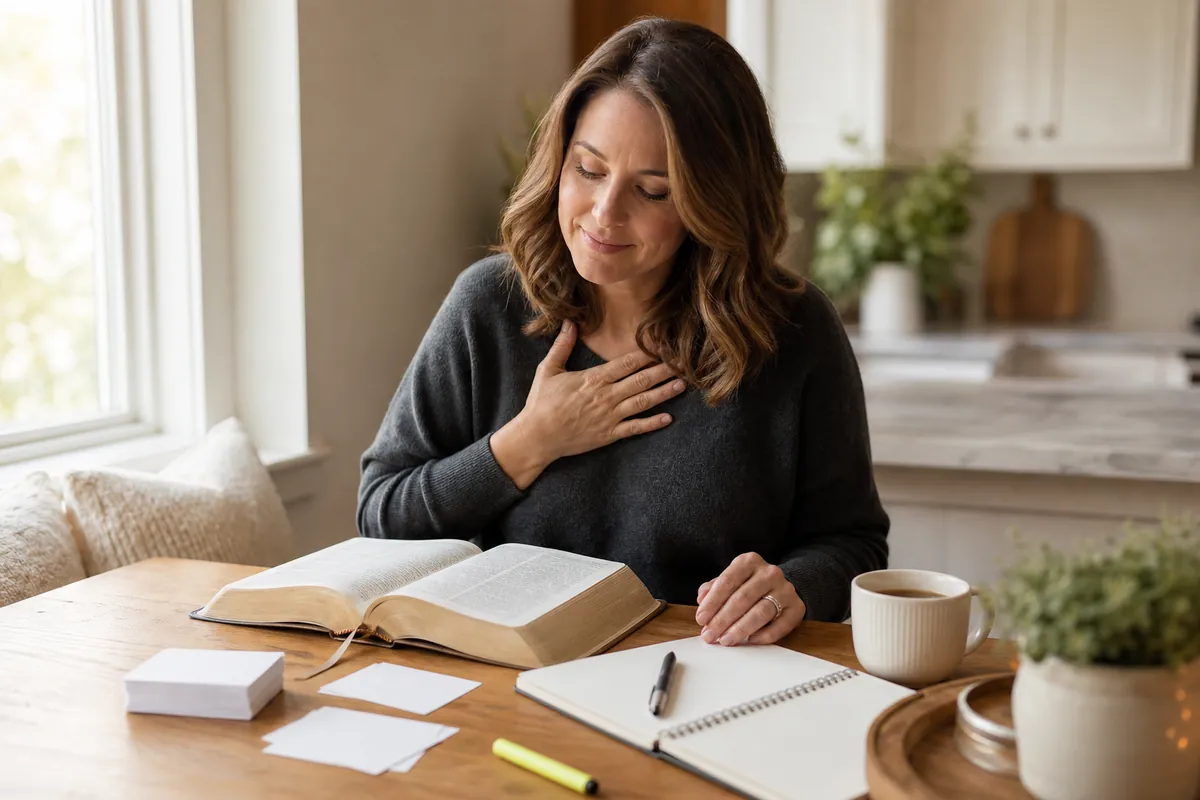
Can writing out a verse help more than reading it?
Yes, and this is one of the most underused tools in scripture memory. Copying a verse by hand engages your eyes, your hand, and your voice if you read it aloud as you write, which reinforces the words through three senses instead of one.
This is also why scripture writing as a regular practice, not just for memory work, has become popular among women building a daily quiet-time habit. The physical act of writing forces a slower pace than scanning a page, and slower is almost always better for retention.
If you journal your prayers already, you can fold memory verses into that same notebook. Writing the verse at the top of the page before you pray through it ties the memorization directly to a habit you're already keeping, an idea covered more fully in how to journal your prayers.
What should I do when I keep forgetting a verse?
Forgetting is part of the process, not a sign of failure. A few adjustments usually solve it.
- Shorten your phrases. If you're losing the verse partway through, you may be trying to hold too much at once.
- Add a visual or physical cue. Some women tie a verse to a specific location, like reciting it every time they're at a stop sign.
- Review more often than feels necessary. Once a verse feels memorized, it still needs occasional review to stay memorized.
- Say it with someone else. Reciting with a spouse, a friend, or a small group creates accountability and catches mistakes you wouldn't notice alone.
If you lead or attend a small group, this is worth building into your regular gathering. A few minutes of group recitation at the start or close of a meeting reinforces the verse for everyone and costs almost no time.

How do I keep memorized verses from fading over time?
Long-term retention comes down to a simple review rhythm rather than any special trick. Keep a running list of verses you've memorized, and rotate through a few each week, even just while you're making dinner or driving. Verses you don't revisit for months will feel shaky again, and that's expected. A quick refresh usually brings them back faster than the original memorization did.
Pairing memory work with a slower, steady writing practice is one of the gentlest ways to keep verses fresh without adding pressure to your week. If you'd like a structured way to do this, our 30-Day Scripture Writing Plan walks you through one verse a day, written out by hand, with space for reflection alongside it. It's built for exactly this kind of steady, low-pressure repetition rather than a memory sprint. You can browse our full collection of guides and journals in the shop if you're looking for something to pair with your current study.
Scripture memory isn't about proving you have a good memory. It's about giving God's word a place to live in your mind so it's there when you need it, on a hard afternoon, in a moment of decision, or simply as you fall asleep. Small, steady effort gets you there far more reliably than talent ever would.
Frequently asked questions
- How long does it really take to memorize a Bible verse?
- Most short verses can be memorized in five to ten minutes a day over about a week, though this varies by verse length and how often you review. Consistency matters more than speed.
- Is it better to memorize a whole chapter or single verses?
- Start with single verses to build confidence and a working method. Once verse-by-verse memorization feels manageable, you can string verses together into short passages using the same techniques.
- What if I forget a verse I already memorized?
- Forgetting is normal and does not erase the good it already did. Simply schedule the verse back into your review rotation rather than starting over with guilt.
- Do I need to memorize word-for-word to get the benefit?
- Word-for-word accuracy is worth working toward, especially for verses you will quote to others, but grasping the meaning and general wording still shapes your thinking even before you have it perfect.
- What translation is easiest to memorize?
- Many women find shorter, more rhythmic translations easier to retain, though the best translation is the one you already read regularly, since familiarity speeds up memorization.
- scripture memory
- bible study methods
- quiet time
- spiritual disciplines
- bible verses
Related reading
- How to Write a Bible Study Guide for Your Small GroupLearn how to write a Bible study guide for your small group, step by step, with a simple structure you can reuse week after week.
- How to Study the Bible with a Highlighting System That WorksA simple, consistent bible highlighting system to mark promises, commands, and themes so you can find them again. Easy to start today.
- How to Study the Bible with a Reading Plan That Actually Fits Your LifeA realistic bible reading plan for beginners: how much to read, what to include, and how to keep going when life gets busy.