November 15, 2026 · 5-min read
The Story Behind 'Come, Thou Long Expected Jesus'
Two short verses, one long wait. Charles Wesley wrote the prayer that Advent sings every year.

The story behind "Come, Thou Long Expected Jesus" begins with Charles Wesley, who published it in the 1740s in a small collection called Hymns for the Nativity of Our Lord. It is a prayer to Christ in two short verses, asking Him to come and free His people. That is why it has belonged to Advent ever since: the whole hymn is made of longing.
Who wrote "Come, Thou Long Expected Jesus"?
Charles Wesley (1707-1788) was an Anglican priest and the brother of John Wesley, with whom he led the Methodist movement. He wrote thousands of hymns, among them "Hark! The Herald Angels Sing" and "Love Divine, All Loves Excelling."
This hymn first appeared in Hymns for the Nativity of Our Lord. Wesley wrote it as two verses of eight lines each, though many hymnals print it as four shorter verses so that the words fit the tune.
What is the hymn asking for?
Every line is a name for Jesus or a request to Him. The opening verse reads like a list of what the people of Israel hoped for:
- "Born to set thy people free": the promise of a deliverer.
- "Israel's strength and consolation": the One who comforts and holds up His people.
- "Hope of all the earth": the hope is wider than one nation.
- "Dear desire of every nation": a phrase that echoes Haggai 2:7, "the desire of all nations shall come."
- "Joy of every longing heart": the answer to the ache of waiting.
The second verse turns to the manger. "Born a child and yet a King," it says, and then it prays for that King to "reign in us for ever" and to rule "in all our hearts alone." The line echoes Isaiah 9:6-7, where a child is born and the government rests on His shoulder.
Read with it: Haggai 2:7 and Isaiah 9:6-7.
Ask: Which name for Jesus in the first verse would you most like to say aloud this week, and why?
Why do we sing it in Advent?
Because it does not tell the Christmas story. It asks for it. The hymn begins with a command, "Come," and it sings as people who are still waiting. Advent gives a family or a study group a season to wait on purpose, and this hymn gives them the words.
Where "O Come, O Come, Emmanuel" gathers the ancient names for the Messiah, this hymn gathers what the longing is for: freedom, rest, a King who rules in our hearts, and joy. If you sing both in the same season, our story behind "O Come, O Come, Emmanuel" pairs well with this one.
What tune is it sung to?
Two tunes commonly go with Wesley's words.
- Hyfrydol is a Welsh tune by Rowland Hugh Prichard, published in 1844. It is also the tune many people know for "Love Divine, All Loves Excelling."
- Stuttgart is a German tune attributed to Christian Friedrich Witt, from the collection Psalmodia Sacra. Its shorter lines are the reason hymnals divide Wesley's eight-line verses into four.
Either one works at home. Try one for a week, then the other, and notice which suits your family's voices.
Is this the same hymn as "Come, Thou Fount of Every Blessing"?
No. The first words match, but the hymns are different. "Come, Thou Fount of Every Blessing" is a hymn of thanks and of a wandering heart, and you can read its history in the story behind Come Thou Fount of Every Blessing. "Come, Thou Long Expected Jesus" is the Advent hymn.
Singing it this Advent
It is short enough to learn in a single sitting. Light the Advent candle, read Haggai 2:7 and Isaiah 9:6-7, sing the first verse, then the second, and ask the question above. Repeat it each evening of the week and let the children pick their favorite line.
For more hymns to sing across the season, with the story behind each, see The Best Public-Domain Hymns for Advent, which also comes with a free printable Advent Hymn Reading Plan for the four weeks of Advent. When Christmas Eve arrives, six public-domain Christmas hymns and the stories behind them carry the singing forward, including Wesley's "Hark! The Herald Angels Sing."
Studying a hymn slowly
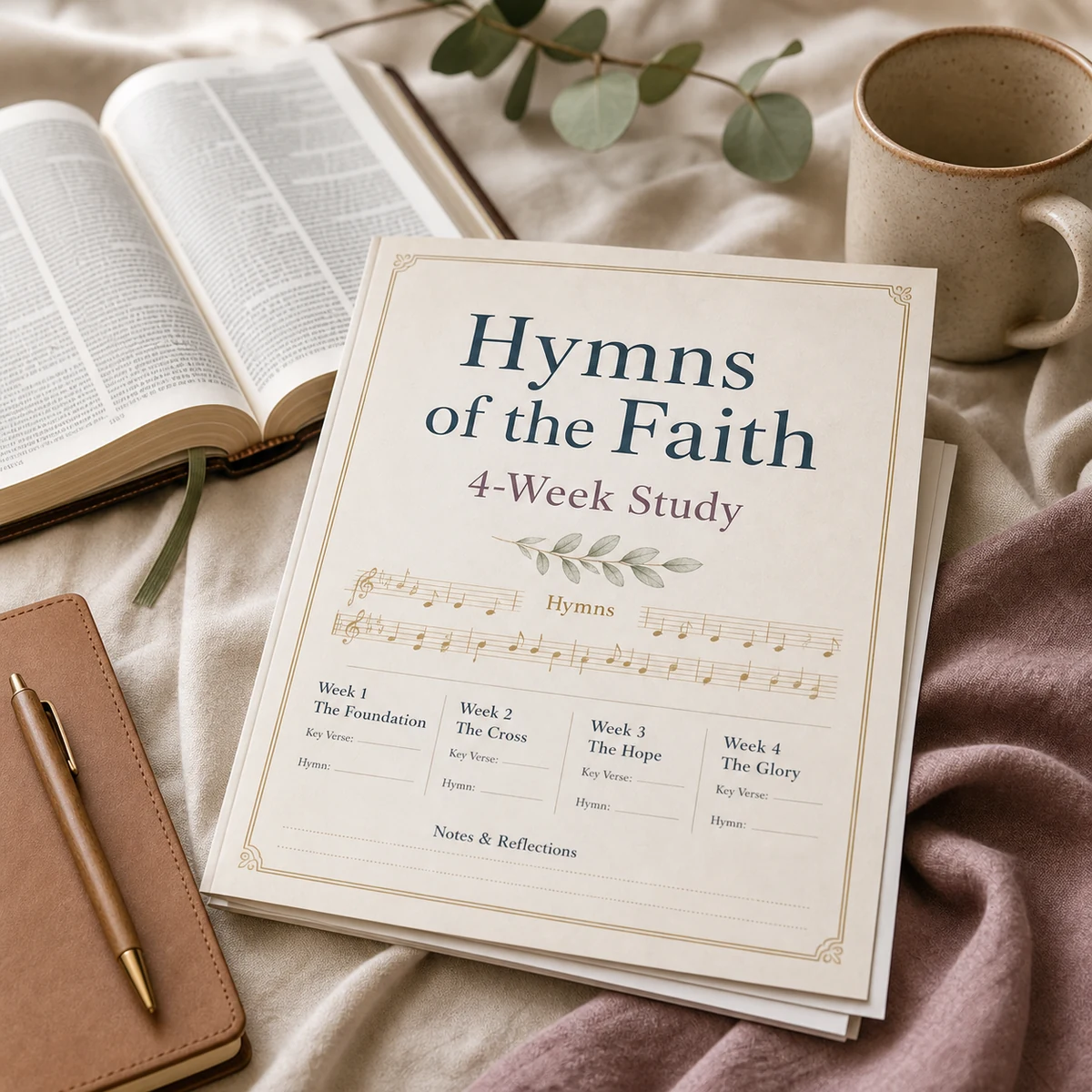
If you would like the history and the Scripture behind well-loved hymns gathered in one place, our Hymns of the Faith study pairs each hymn with its story and the passages beneath its language, with room for handwritten reflections. If you are new to singing at home, our guide to leading a hymn study at home walks through small, doable steps.
A printable to help
Frequently asked questions
- Who wrote Come, Thou Long Expected Jesus?
- Charles Wesley (1707-1788), the Anglican priest and hymn writer, wrote it. It appeared in his collection Hymns for the Nativity of Our Lord in the 1740s.
- What does the hymn mean?
- It is a prayer asking Jesus to come and set His people free. The first verse names Him as Israel's strength and consolation and the desire of every nation, and the second asks the child born a King to rule in our hearts.
- What tune is Come, Thou Long Expected Jesus sung to?
- Two tunes commonly go with it. Hyfrydol is a Welsh tune by Rowland Hugh Prichard, published in 1844. Stuttgart is a German tune attributed to Christian Friedrich Witt.
- Is Come, Thou Long Expected Jesus in the public domain?
- Yes. Wesley's words are from the 1700s and both traditional tunes are from the 1700s or 1800s, so they are free to sing, print and copy. A modern arrangement can still be protected, so check the specific setting you use.
- Is it the same hymn as Come, Thou Fount of Every Blessing?
- No. They are two different hymns by two different writers that share the opening words Come, Thou. Come, Thou Fount is a hymn of thanks and wandering, and Come, Thou Long Expected Jesus is a hymn of Advent waiting.
- hymn history
- come thou long expected jesus
- charles wesley
- advent
- devotional
Related reading
- Public-Domain Christmas Hymns: Six Favorites and the Stories Behind ThemSix public-domain Christmas hymns with who wrote them, when, and the Bible passage each one sings from, for families and women's Bible study groups.
- Advent Bible Study for Women's Groups: Questions for Four WeeksAn Advent Bible study for women's groups: four weeks of passages and discussion questions on hope, peace, joy and love, with tips for leading in a busy December.
- The Story Behind 'O Come, O Come, Emmanuel'The story behind O Come, O Come, Emmanuel: seven ancient Advent prayers, a Latin hymn and Neale's English words. Here is its history and what each verse means.