
September 23, 2026 · 6-min read
How to Lead a Bible Study Opening Prayer
A quiet, simple beginning can help every woman settle her heart before opening God's Word together.
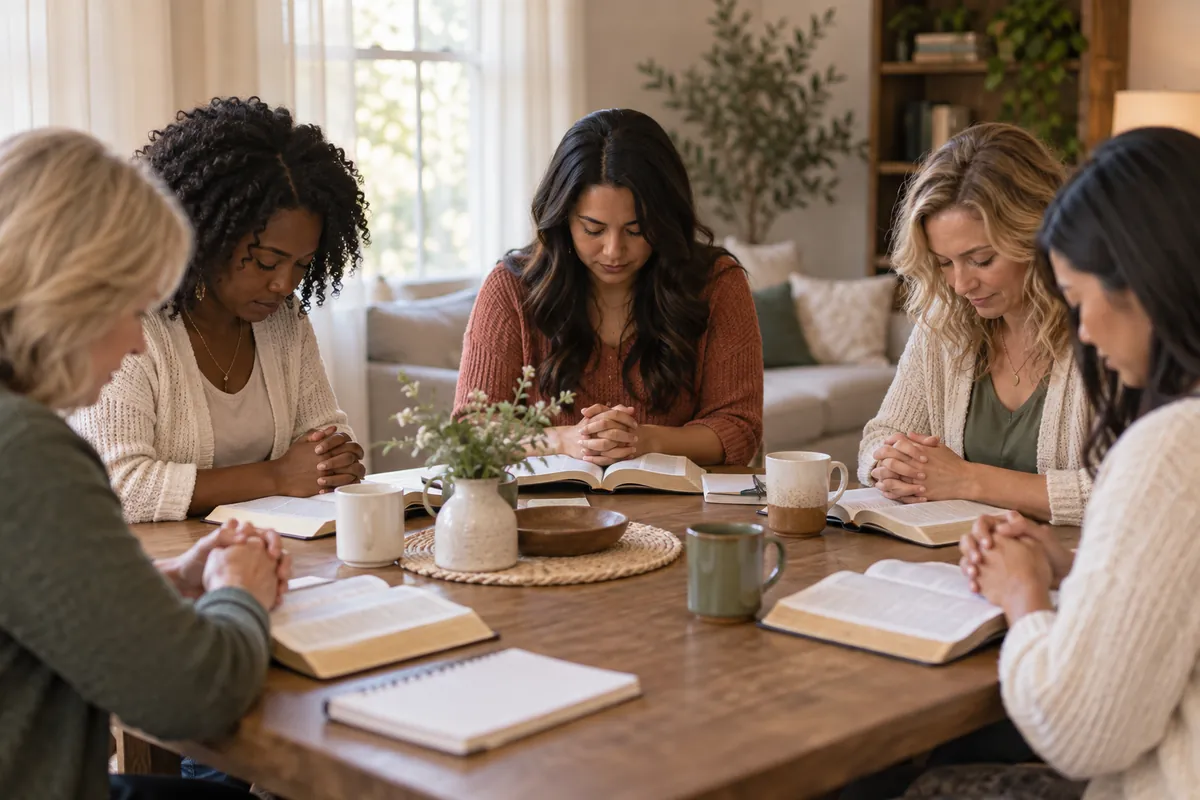
To lead a Bible study opening prayer, briefly welcome God into your time, thank Him for His Word, and ask Him to give your group understanding and willing hearts. It does not need to be long or eloquent; a sincere, Scripture-shaped prayer helps everyone turn from the pace of the day toward the Lord.
If you have wondered how to lead a Bible study opening prayer without sounding formal, remember that you are not performing for the group. You are simply guiding women to begin together in dependence on God.
What should an opening prayer include?
A simple opening prayer usually has three or four parts. You do not need every part every week, but this pattern gives you a steady place to begin.
- Praise God for who He is. Name something true about His character: faithful, holy, merciful, wise, or near.
- Thank Him for gathering your group. Thank Him for the women present and for the opportunity to study Scripture.
- Ask for help. Pray for understanding, honesty, humility, and a willingness to obey what God shows you.
- Bring present needs to Him. Mention the burdens your group carries, without feeling pressure to list every detail.
Jesus said, “For where two or three are gathered together in my name, there am I in the midst of them” (Matthew 18:20, KJV). This is a comforting truth for a living room group, a church classroom, or a video call: Christ is not distant from your gathering.
How do I prepare to pray before the group?
Preparation can be very simple. Read the passage or study topic before everyone arrives, and take one quiet minute to consider what your group most needs from God that day.
You might jot down a few words on your leader notes:
- Thank God for His faithfulness.
- Ask for clear minds and open hearts.
- Pray that the passage will shape daily life.
- Remember a shared concern, such as illness, grief, or a busy season.
This is not a script you must follow perfectly. It is a small support when your mind goes blank or nerves rise. If you are choosing a study for a newer gathering, it may also help to read how to choose a Bible study for a new small group.
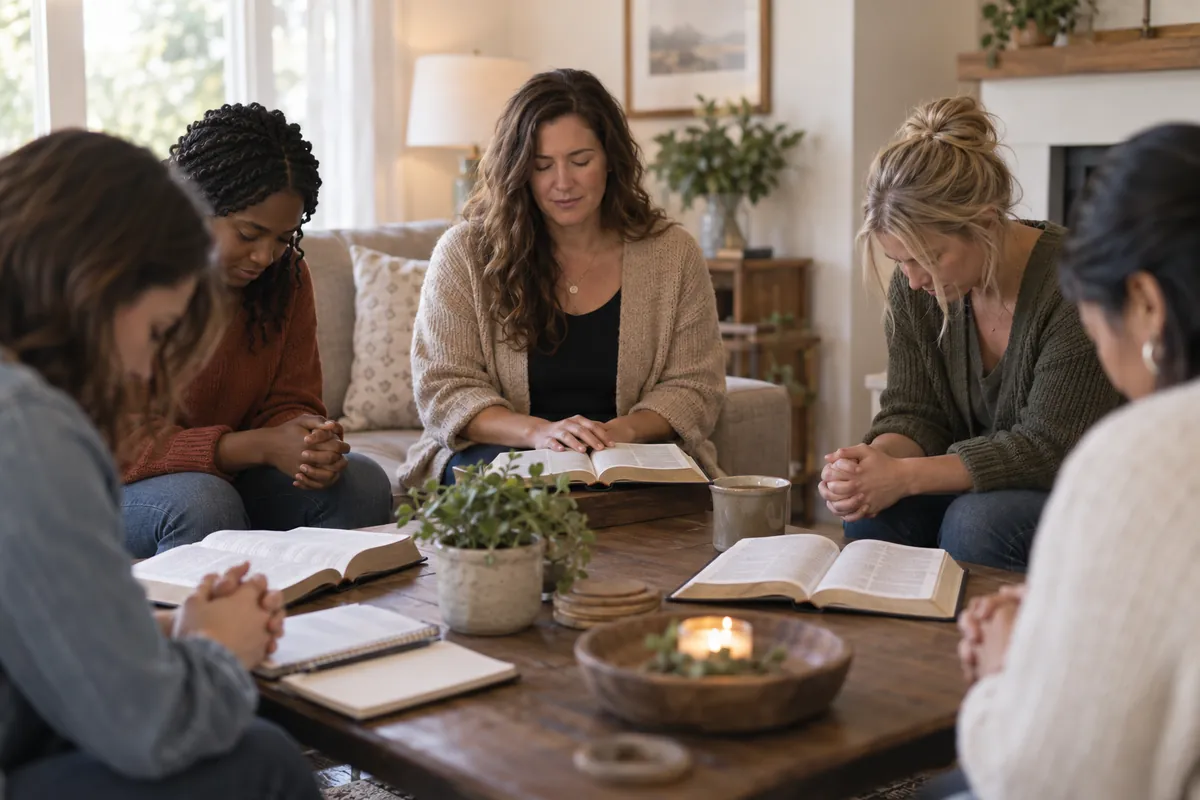
What is a simple opening prayer outline?
Try this four-sentence outline when you need a dependable starting point:
- Address God: “Father in heaven…”
- Praise or thank Him: “Thank You for bringing us together and for giving us Your Word.”
- Ask for His help: “Please give us understanding as we study, and help us receive what You teach us.”
- Commit the time to Him: “Guide our conversation, care for the needs in this group, and help us honor You. In Jesus’ name, amen.”
This pattern is short enough for regular use, yet it leaves room to pray specifically for the passage. Over time, your prayers may grow more natural because you are learning to listen for what your group needs.
How can I keep the prayer focused?
An opening prayer is meant to open the study, not carry every prayer request for the evening. Keeping it focused helps women settle in and gives your discussion enough time.
A few gentle boundaries can help:
- Aim for one to three minutes.
- Pray about the study passage or theme.
- Mention broad needs when details are private.
- Save longer requests for a closing prayer, prayer partners, or a separate prayer time.
- Avoid feeling responsible to solve problems in the prayer itself.
Philippians 4:6 gives a beautiful direction: “But in every thing by prayer and supplication with thanksgiving let your requests be made known unto God” (KJV). You can bring real needs to God while trusting Him to hold what your group cannot fix.
What can I say in an opening prayer?
Here is a sample prayer you can adapt for almost any women’s Bible study:
Lord, thank You for bringing us together today. Thank You that Your Word is true and that You know each heart in this room. Please quiet our distractions, give us wisdom as we study, and help us respond with faith and obedience. Be near to the women who are carrying burdens today, and let our conversation be gracious and helpful. In Jesus’ name, amen.
For a study about a specific passage, add one line that connects directly to it. For example, if you are studying God’s peace, pray, “Teach us to trust You with the worries we have carried into this room.”

Should I invite others to pray?
You can, but you do not have to. Some groups appreciate hearing several short prayers; others feel safer when the leader begins each week. Consider your group’s maturity, comfort level, and available time.
A gentle invitation might sound like this: “Before I pray, would one or two women like to thank God for something from this week?” Leave room for silence. If no one responds, pray as planned without making anyone feel singled out.
As trust grows, women may become more comfortable praying aloud. The goal is never to pressure participation. It is to create a warm, reverent space where women can learn to bring their lives honestly before God.
What if the group is distracted or late?
Bible study often begins after work, dinner, traffic, caregiving, or a full day of responsibilities. A brief pause can help everyone arrive emotionally as well as physically.
You might say, “Let’s take a quiet moment to set aside what is pulling at our attention, then I’ll open us in prayer.” Ten seconds of silence can feel long at first, but it often makes the prayer more meaningful.
You can also acknowledge the moment plainly: “Lord, You know we have come in carrying many things. Help us be present with You now.” That kind of honesty invites grace rather than pretending everyone is fully settled.
How can prayer shape the whole study?
Your opening prayer sets a gentle tone for the discussion. When you ask God for humility and wisdom, it reminds everyone that Bible study is more than sharing opinions. You are gathering to hear and respond to God’s Word together.
Consider returning to one phrase from the opening prayer near the end. If you asked for courage to obey, ask each woman to consider one faithful next step. If you prayed for peace, close by remembering what the passage says about God’s care.
For groups that want a simple structure for personal and shared prayer, The ACTS Prayer Method: A Simple Way to Pray with Purpose offers a helpful framework.
What can help me lead with confidence?
Confidence in leading prayer usually grows through quiet practice, not through finding perfect words. Prepare a brief outline, pray before the meeting begins, and let Scripture guide the language you use.
A simple leader resource can also keep prayer requests, discussion questions, and meeting notes in one place. If that would serve your group, this Women's Small-Group Leader Guide Template is designed to help you prepare with calm, practical structure.
Most of all, remember that God hears you. “The Lord is nigh unto all them that call upon him, to all that call upon him in truth” (Psalm 145:18, KJV). Your opening prayer can be simple, sincere, and fully enough because the One you are calling on is faithful.
Frequently asked questions
- How long should an opening prayer be for Bible study?
- For most groups, one to three minutes is enough. Keep it focused on welcoming God, preparing hearts, and asking for wisdom in the study.
- What if I feel nervous praying out loud?
- Write down a few simple phrases beforehand and pray them slowly. God is not asking for polished words; He welcomes a sincere heart.
- Should everyone pray at the beginning of Bible study?
- Not necessarily. A leader can pray for the group, then invite brief prayers from others if that feels comfortable and suits your group.
- Can I use a written opening prayer?
- Yes. A written prayer can help you stay calm and keep the group focused, especially when you are new to leading.
- bible study
- opening prayer
- small group leadership
- women's ministry
- prayer
Related reading
- How to Study the Bible When You Feel Nothing (Spiritual Numbness)Why don't I feel anything when I read the Bible? A practical, honest look at spiritual numbness and how to keep studying when emotion won't come.
- How to Make a Prayer Journal When You Don't Know Where to StartLearn how to make a prayer journal step by step, including what to include, how to structure entries, and simple ways to start today.
- How to Study the Bible When You Work Night ShiftsLearn how to have a quiet time working night shift with a flexible rhythm built around your actual sleep and wake hours, not the clock.