
August 17, 2026 · 7-min read
How to Study the Bible Alone When You're an Introvert
You don't need a circle of chairs and a shared box of tissues to grow deep in Scripture. Sometimes the quietest room is the one where God speaks clearest.
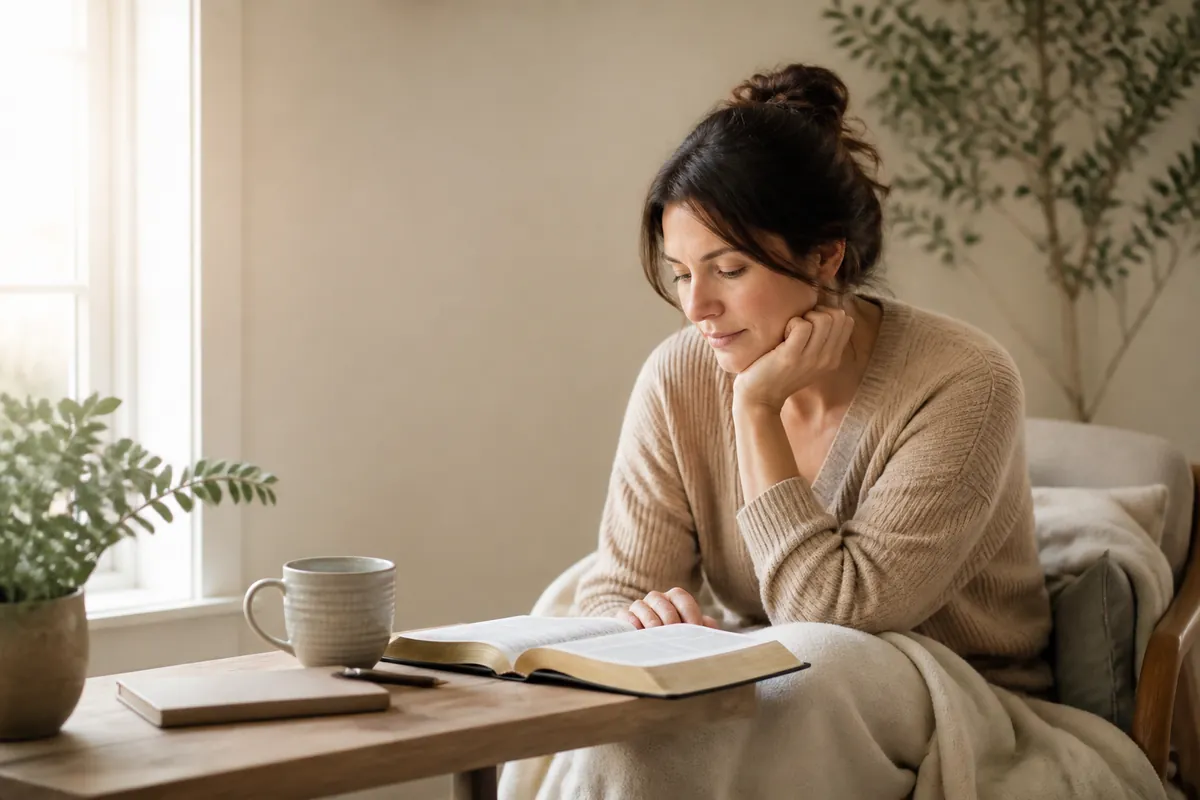
You study the Bible alone by choosing one short passage, reading it slowly two or three times, writing down what you notice and what it means for your life, and closing in prayer, without needing anyone else in the room to make it count. This is a full, legitimate way to grow in Scripture, not a workaround until you find "better" group discipline.
If group Bible studies leave you quieter than you started, more editing your words before you say them than actually hearing from God, you are not doing faith wrong. Some of the richest scriptural depth happens in solitude. This is a method for the woman who wants to go deep, just not out loud.
Why do group studies drain introverts?
Group settings ask something specific of you: real-time verbal processing, in front of other people, often while they are also talking. That is a genuinely different skill from reading and reflecting.
For an introvert, this usually means:
- Your best insights arrive on the drive home, not during the discussion.
- You spend energy managing how you come across instead of absorbing the text.
- A room of eight people can mean six minutes of actual thinking time for you.
- Recovery afterward eats into the spiritual benefit you were supposed to gain.
None of this means you love God's word less than the woman who processes out loud with ease. It means your wiring calls for a different container.
How do I start studying the Bible alone?
Start smaller than feels necessary. A short passage done well beats a long passage skimmed.
- Pick one passage. A single psalm, one chapter, or even six to ten verses is plenty.
- Read it twice, slowly. Once for the overall sense, once to notice details you missed the first time.
- Write three things down. What the passage says, what it means, and one honest response.
- Pray briefly, in your own words. You do not need eloquence, just honesty.
- Return to the same passage the next day if it is not finished with you. Depth often comes on the second or third pass, not the first.
This rhythm takes fifteen to twenty-five minutes and needs nothing but a Bible, a notebook, and a closed door.
What method helps me study deeply without a group?
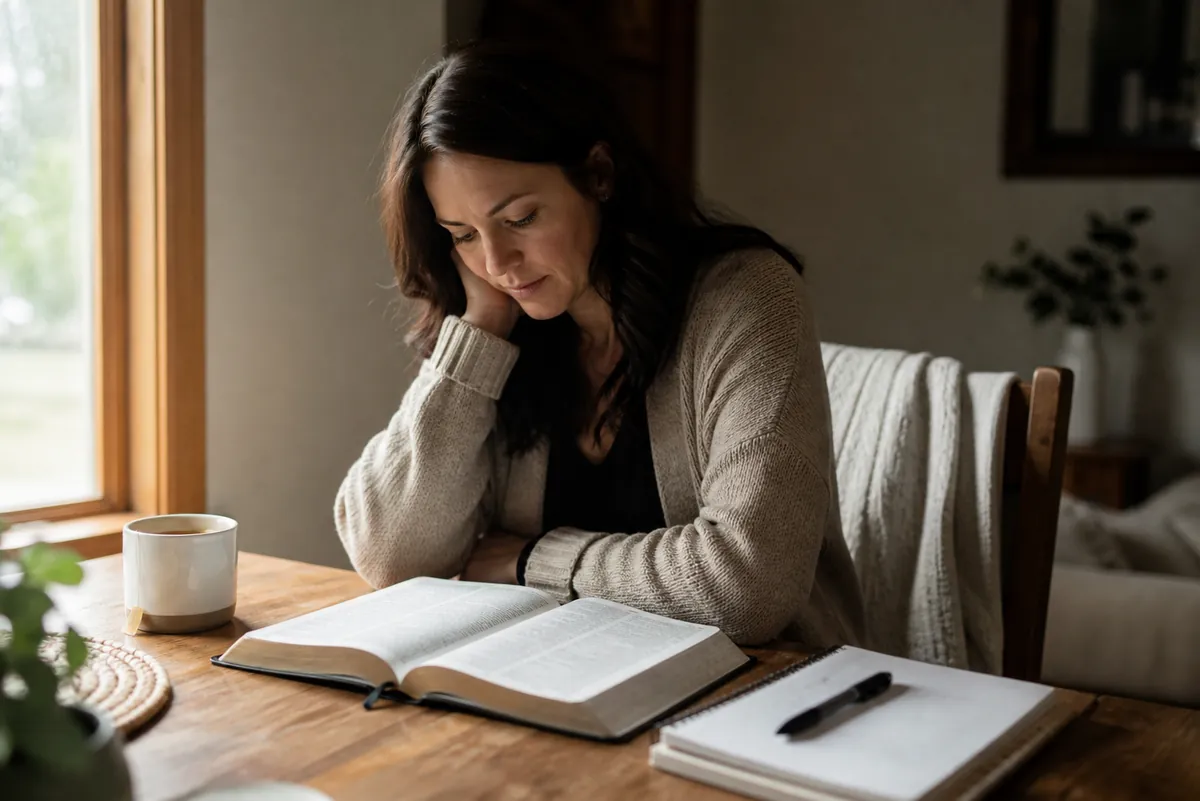
The SOAP method is a natural fit for internal processors, because it turns reflection into something written rather than spoken.
- S — Scripture. Write out the verse or two that stands out most.
- O — Observation. What is actually happening in the text? Who is speaking, to whom, and why?
- A — Application. Where does this touch your actual week, not a hypothetical one?
- P — Prayer. A short written prayer in response to what you read.
Writing gives you the same clarifying effect that speaking gives an extrovert in a group, without needing an audience for it. Many women find they say truer things on paper than they would ever say aloud in a circle of folding chairs. If distraction rather than group settings is what derails your time, this related piece on studying the Bible when your phone keeps pulling your attention pairs well with a solo rhythm.
How do I keep myself accountable without a group?
Accountability does not require a weekly meeting. It requires a structure that notices when you have drifted.
- A repeating time slot. Same fifteen minutes, same chair, most days. Consistency does more than intensity.
- A visible tracker. A simple checkmark on a calendar tells you the truth about your week faster than memory does.
- One trusted person, not a group. A single friend you text "Psalm 46 today" to can supply real accountability without the drain of a full discussion.
- A recurring passage or plan. Working through one book of the Bible slowly gives your solo time a shape, so you are not reinventing your approach each morning.
If you have never built a steady rhythm before, this guide to building a daily quiet-time habit walks through the practical side of making it stick.

What should I do when I feel stuck or alone in it?
Every solo student hits a season where the page feels flat. A few honest habits help more than pushing harder:
- Change the passage, not the discipline. If a book feels dry, move to a psalm or a gospel narrative for a week.
- Read a verse aloud to yourself, even quietly. Hearing your own voice can loosen a passage that reading silently has not.
- Remember Scripture's own solitary figures. David wrote many psalms in caves and wilderness, alone and unheard by anyone but God. "Be still, and know that I am God" (Psalm 46:10, KJV) was not written for a crowded room.
- Let prayer be plain. "Lord, I don't understand this today, help me anyway" is a complete prayer.
Feeling stuck is not evidence you are failing at this. It is evidence you are still showing up, which is most of the discipline.
A gentle note for the road ahead
If you want a little more structure without losing the solitude that suits you, a focused devotional walk through a single, well-loved passage can be a good next step. Psalm 23 — A Devotional Study for Women was written for exactly this kind of quiet, unhurried study, one woman and her Bible, working through a familiar psalm slowly enough to actually meet it. There are other guides built the same way in the shop if you would rather start somewhere else in Scripture.
However you build your rhythm, the aim is the same one every believer shares, whether she studies in a full room or an empty one: to know God's word a little more truly than she did the week before. Solitude was never a barrier to that. For some of us, it is the doorway.
Frequently asked questions
- Is it wrong for a Christian to prefer studying the Bible alone?
- No. Scripture shows both corporate worship and private devotion as normal parts of faith. Jesus himself withdrew alone to pray, and solo study is simply another form of seeking God, not a lesser one.
- How long should a solo Bible study session be?
- There is no required length. Fifteen to thirty minutes of focused reading and reflection is enough to go deep, especially if you are consistent about returning to it a few times a week.
- What Bible study method works best for someone who processes internally?
- Slow, written methods like verse-by-verse journaling or the SOAP method (Scripture, Observation, Application, Prayer) tend to work well, since they let you think on paper instead of out loud.
- Do I need special books or a study Bible to study alone?
- No. A regular Bible, a notebook, and a quiet fifteen minutes are enough to start. Study Bibles and guides can add depth later, but they are not a requirement.
- Can solo Bible study replace a small group entirely?
- It can be your primary rhythm, but most believers benefit from at least occasional fellowship for accountability and encouragement, even if it is a single trusted friend rather than a full group.
- quiet time
- bible study methods
- introvert
- solo study
- scripture
- spiritual growth
Related reading
- How to Write a Bible Study Guide for Your Small GroupLearn how to write a Bible study guide for your small group, step by step, with a simple structure you can reuse week after week.
- How to Study the Bible with a Highlighting System That WorksA simple, consistent bible highlighting system to mark promises, commands, and themes so you can find them again. Easy to start today.
- How to Study the Bible with a Reading Plan That Actually Fits Your LifeA realistic bible reading plan for beginners: how much to read, what to include, and how to keep going when life gets busy.