August 21, 2026 · 6-min read
How to Study the Bible When You're New to the Faith
You don't need a seminary degree or a color-coded system to open your Bible with confidence. You just need a place to start.
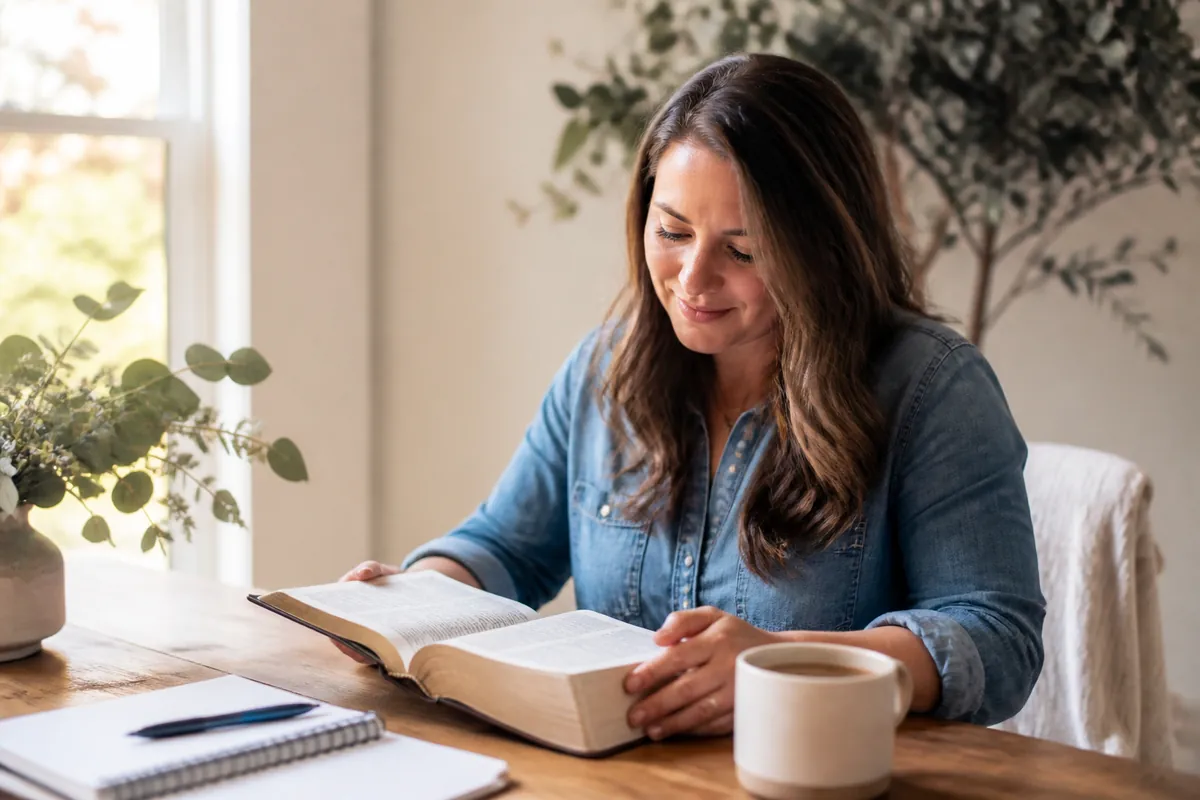
The simplest way to study the Bible for beginners is to choose one short passage, read it slowly in a translation you can actually understand, and ask a few basic questions about what it says before moving on. You do not need special training or a shelf of commentaries to begin. You need a starting point, a little consistency, and permission to go slowly.
If you are new to the faith, or newly back in a pew after years away, an open Bible can feel like a locked door. That feeling is common, and it does not mean you are doing something wrong. It means you have not yet found your method.
Where do I even start reading?
Many beginners try to start at Genesis and read straight through, then stall out somewhere in Leviticus. There is a gentler path.
Consider starting in one of these places instead:
- The Gospel of John, for a clear picture of who Jesus is and what He said
- The book of Philippians, a short, warm letter about joy and steadiness in hard seasons
- A handful of Psalms, for language to bring your own feelings to God
Any of these gives you a manageable, complete section to work through before moving on. There is no rule that says you must read in canonical order.
What does studying the Bible actually mean?
Reading moves through the words. Studying pauses on them.
A simple way to think about it: reading tells you what a passage says, and studying asks what it means and why it matters. You do not have to master this distinction before you begin. It develops naturally the more you slow down and ask questions of the text.
Paul wrote to Timothy about the purpose of Scripture in plain terms: "All scripture is given by inspiration of God, and is profitable for doctrine, for reproof, for correction, for instruction in righteousness" (2 Timothy 3:16, KJV). That verse is itself a good starting encouragement — the Bible was given to be useful, not just admired from a distance.
Which Bible translation should a beginner use?
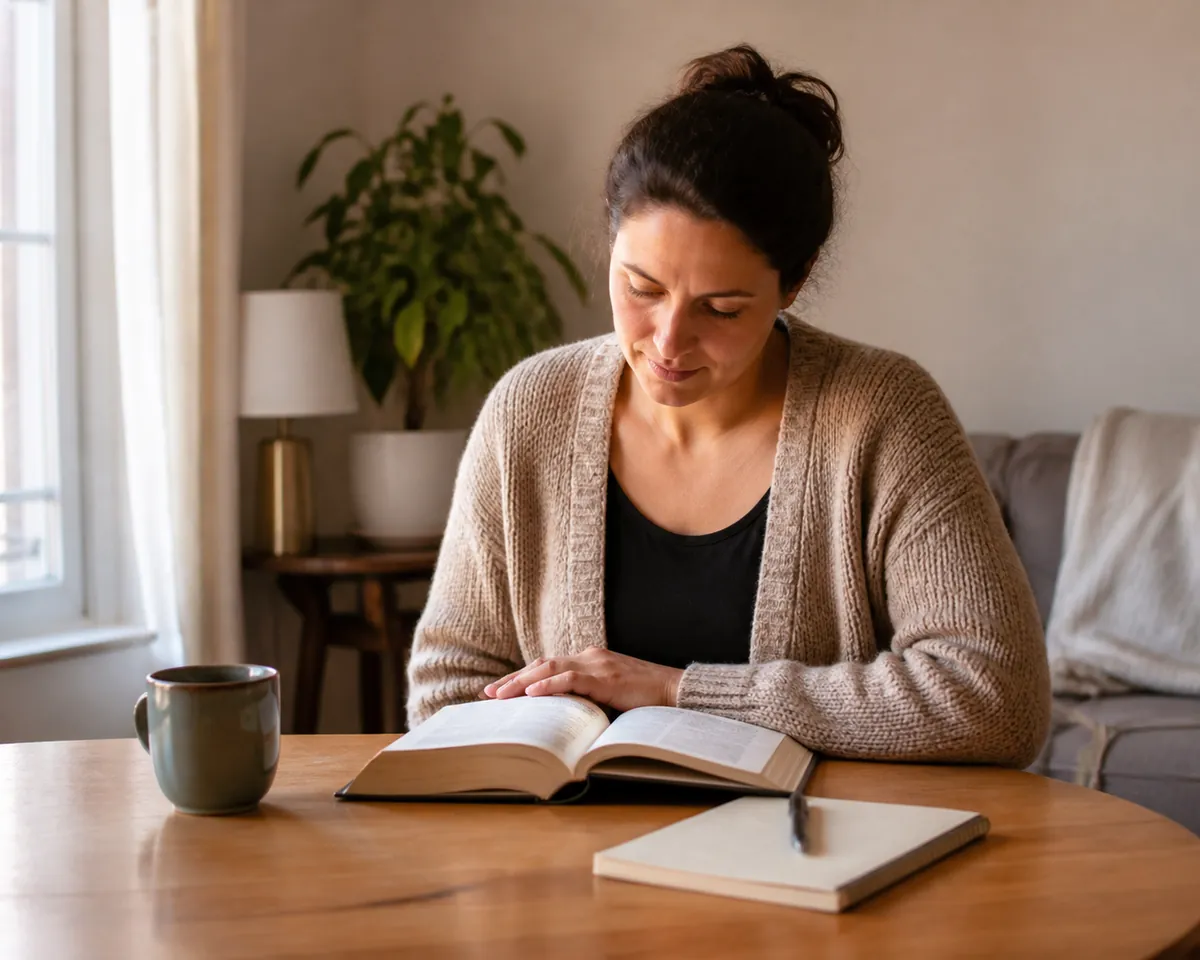
Choose a translation you can read without stopping every sentence to decode the wording. If a version feels like a foreign language, it will wear you down before it teaches you anything.
A few things worth knowing:
- Older public-domain translations, such as the King James Version, use formal, poetic English that some readers love and others find harder going.
- Newer readable translations exist for exactly this reason, and many churches keep a few different versions on hand for people to compare.
- It is completely fine to read the same verse in two translations side by side when a phrase does not make sense.
The "right" translation is the one you will actually open again tomorrow.
What's a simple method I can use every day?
You do not need an elaborate system. A short, repeatable habit beats an ambitious one you abandon after a week.
Try this four-step approach with any short passage:
- Read it slowly, once through for the overall sense, then again more carefully.
- Notice who is speaking, who is being spoken to, and what is actually happening.
- Ask what this passage tells you about God, and what it might be asking of you.
- Respond with a short prayer, even just a sentence, based on what you read.
This is close in spirit to the daily rhythm described in our guide to building a daily quiet-time habit that sticks, which walks through how to make this kind of routine last beyond the first enthusiastic week.
What if I don't understand what I'm reading?
Confusion is normal, not a sign that you are unsuited to this. Even longtime believers hit passages that puzzle them.
A few honest, practical responses:
- Read the passage again in a different translation.
- Look at the verses just before and after for context.
- Write down your question rather than forcing an answer, and bring it to a pastor, small group, or trusted friend.
- Move on. You are allowed to leave a hard passage unresolved and return to it later with fresh eyes.
Joshua 1:8 promises that meditating on God's word, not mastering it instantly, is what shapes a life: "This book of the law shall not depart out of thy mouth; but thou shalt meditate therein day and night" (KJV). Meditation is slow, repeated attention — not a test you either pass or fail on the first try.
Should I study alone, or with other people?
Both have real value, and most women find a blend of the two works best.
Studying alone gives you space to read at your own pace and be honest in your prayers without an audience. Studying with others — a friend, a small group, a Sunday class — gives you perspective you would not reach on your own, plus accountability for showing up.
If distraction is what tends to derail your quiet time, whether alone or in company, our post on studying the Bible when your phone keeps pulling your attention has practical, specific fixes rather than vague willpower advice.
How long should my study time be?
Ten to fifteen minutes a day is a realistic, sustainable target for someone just starting out. That is enough time to read a short passage twice, jot a note or two, and pray briefly.
Longer is not automatically better. A five-minute habit you keep for a year will shape you more than a sixty-minute session you do once and never repeat. Psalm 119:105 puts the goal simply: "Thy word is a lamp unto my feet, and a light unto my path" (KJV) — a lamp lights the next step, not the whole road at once.
A gentle next step
If you would like a bit more structure than "pick a passage and go," a guided study can carry some of that weight for you. Our Book of Philippians — 4-Week Women's Bible Study walks beginners through one short, encouraging letter a little at a time, with simple questions built in so you are never staring at a blank page wondering where to begin. It sits alongside the rest of our shop of study and prayer resources, in case a different book or format fits your season better.
However you begin, the goal is not to arrive at expert knowledge by next week. It is to open your Bible again tomorrow.
Frequently asked questions
- Do I need to read the Bible in order, from Genesis to Revelation?
- No. Many beginners find it easier to start in one of the Gospels, such as John, and add a Psalm or two each week rather than reading straight through cover to cover.
- How much time should I spend studying the Bible each day as a beginner?
- Ten to fifteen minutes a day is a reasonable, sustainable starting point. A short passage read slowly and thoughtfully is more valuable than a long passage skimmed quickly.
- What is the difference between reading the Bible and studying it?
- Reading simply moves through the words, while studying pauses to ask what a passage means, what it reveals about God, and how it applies to your life. Both are worthwhile, and studying builds on reading.
- Which book of the Bible is best for a beginner to start with?
- The Gospel of John and the book of Philippians are both common starting points because they are relatively short, personal in tone, and center clearly on who Jesus is and how to live in response.
- Is it normal to feel confused or lost when you first start studying the Bible?
- Yes, this is a common and expected part of learning something new. Confusion tends to ease with a simple, repeatable method, a readable translation, and a willingness to read the same passage more than once.
- bible study basics
- new believers
- quiet time
- scripture reading
- beginners
Related reading
- How to Write a Bible Study Guide for Your Small GroupLearn how to write a Bible study guide for your small group, step by step, with a simple structure you can reuse week after week.
- How to Study the Bible with a Highlighting System That WorksA simple, consistent bible highlighting system to mark promises, commands, and themes so you can find them again. Easy to start today.
- How to Study the Bible with a Reading Plan That Actually Fits Your LifeA realistic bible reading plan for beginners: how much to read, what to include, and how to keep going when life gets busy.